Docker Decoded: The Apartment Building Analogy
The Big Picture of Docker
Imagine an apartment building. It provides water, gas, internet, and so on...

🏢 Concept: The apartment building stands for the host machine and its shared infrastructure.
The Layout
Inside each floor, we have to design the layout: how many rooms there are, where the walls go, and even how the ceilings are built.
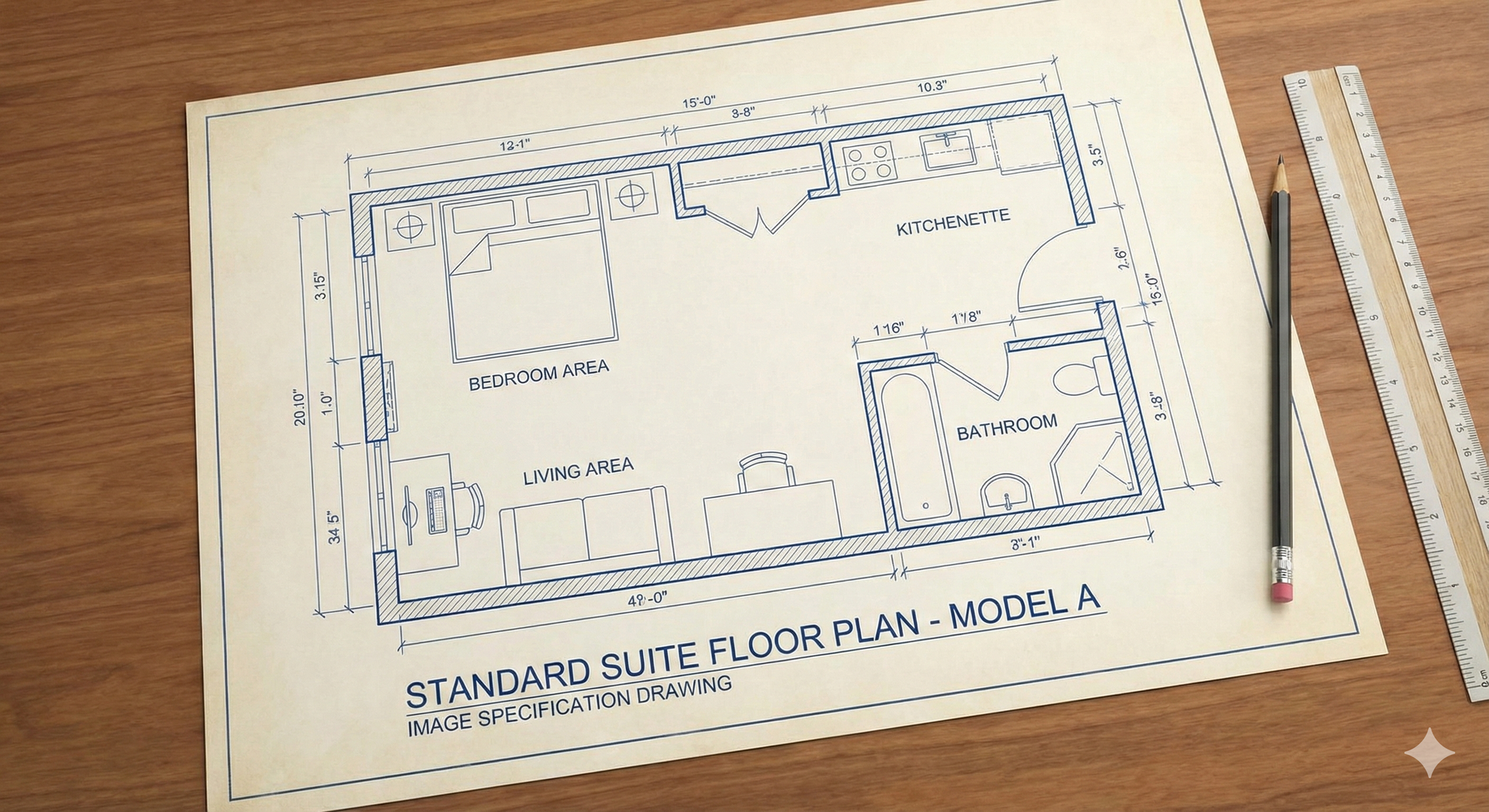
📐 The Plan: The floor plan shows how we split the space into rooms, just like planning how to use host resources.
The Containers
Think of containers as individual rooms.
- Each room has its own furniture.
- People in one room can't see into other rooms (Isolation).
- But all the rooms share the same building infrastructure.

📦 Isolation: Each room is a container: isolated inside, but still sharing the same building services.
The Manager (Docker)
All of this still needs someone in charge. The manager handles the small details for us, like putting locks on empty rooms and keeping a list to control how many residents live in the building.
Docker is like that manager, but for containers on your machine.

👷 Management: Docker is the building manager that creates, removes, and keeps track of containers.
Summary
Here's how all these concepts fit together:
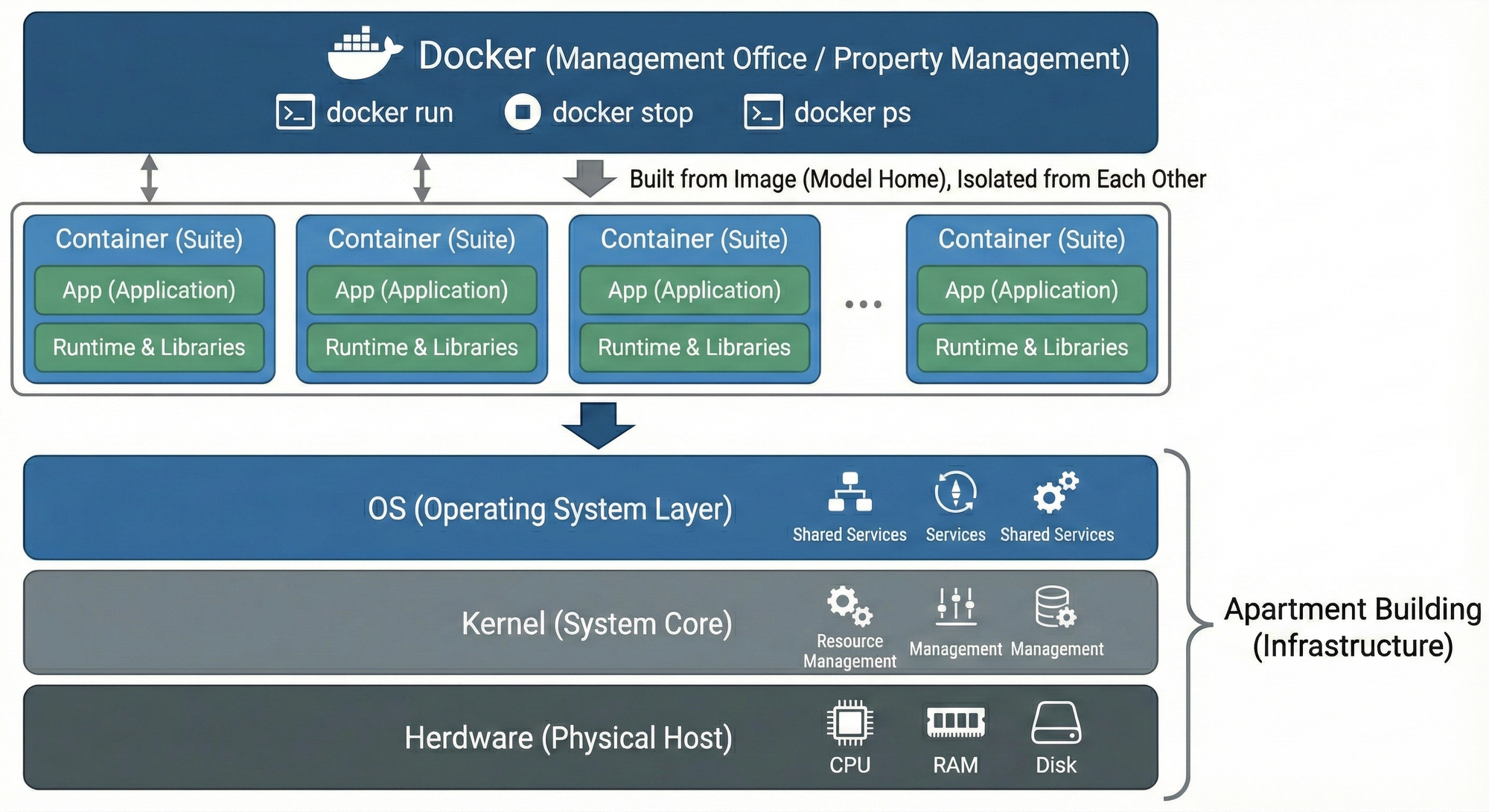
The Big Picture: The host, the layout, the containers, and Docker managing them all.
What Problems Do Containers Solve?
The main difference is that a VM needs its own OS, while a container doesn’t. This reduces resource waste.
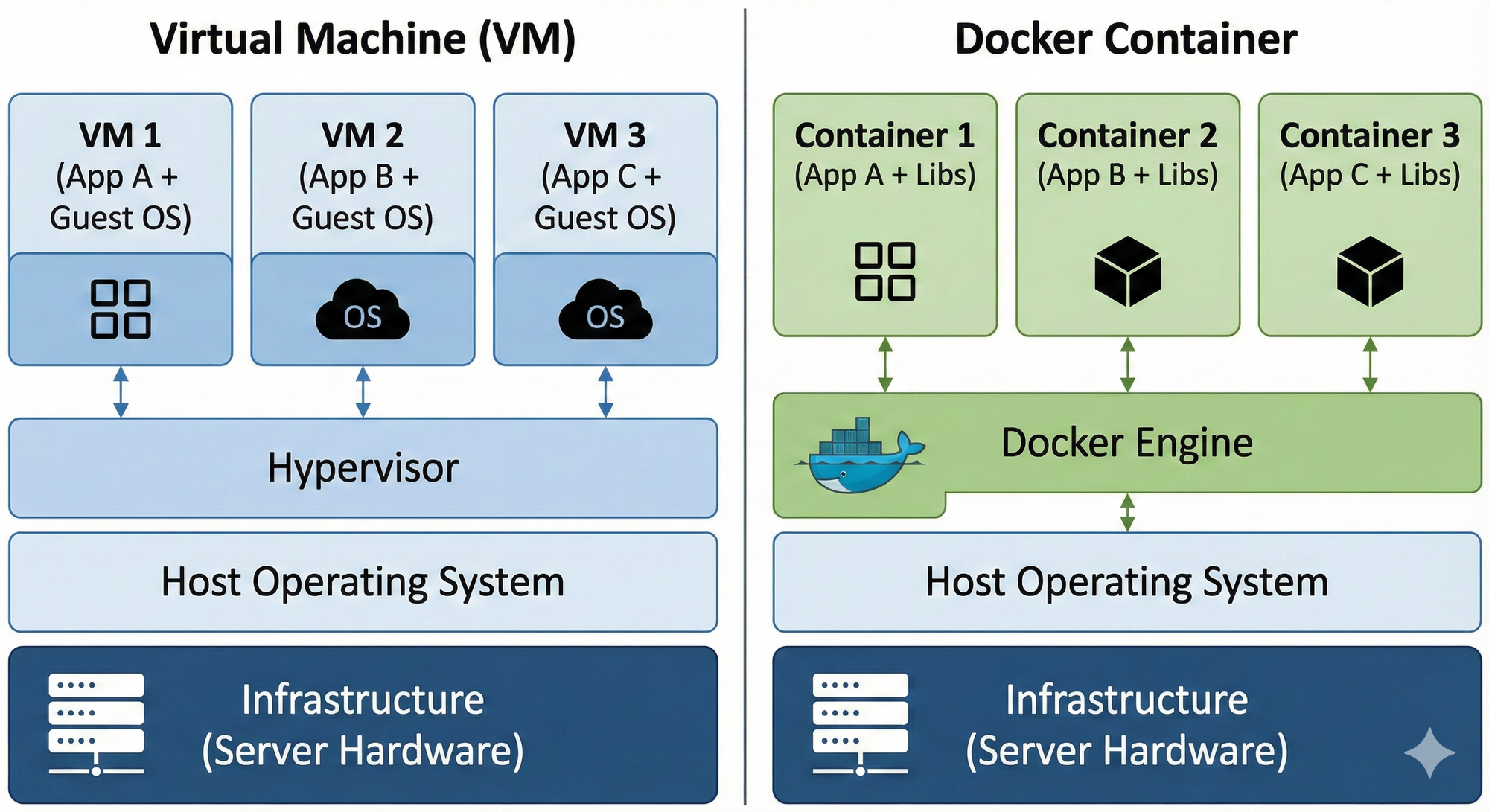
⚖️ Efficiency: VMs carry the weight of a full OS, while containers are lightweight because they share the host kernel.
It Works On My Machine!
For the IT and ops people of that generation, it was a nightmare.
Containers help solve this: you can wrap the environment on one machine into an image and recreate it on any other machine.
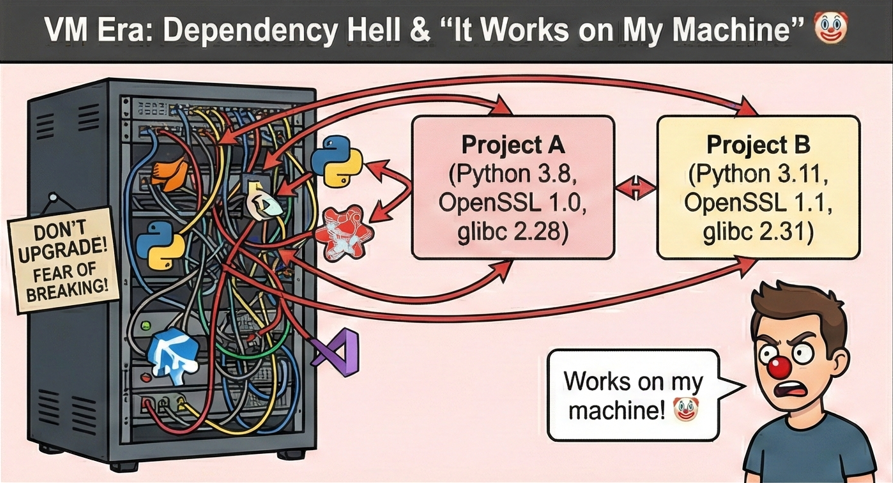
🚢 Consistency: Docker packages the environment with the code, so "it works on my machine" means it works everywhere.
Rebuild & Version control
A VM can be logged into and edited manually. After a few months of changes, no one really knows what state it is in, and rebuilding it is almost impossible. There is also no easy way to roll the machine back.

🕸️ The "Snowflake" Problem: Manual edits cause configuration drift, turning servers into unknown states that are impossible to recreate.
But now the Dockerfile and the container image are the source of truth. Whenever we deploy, we can build a new image with a tag. If the result isn’t good, we just roll back to the previous tag.
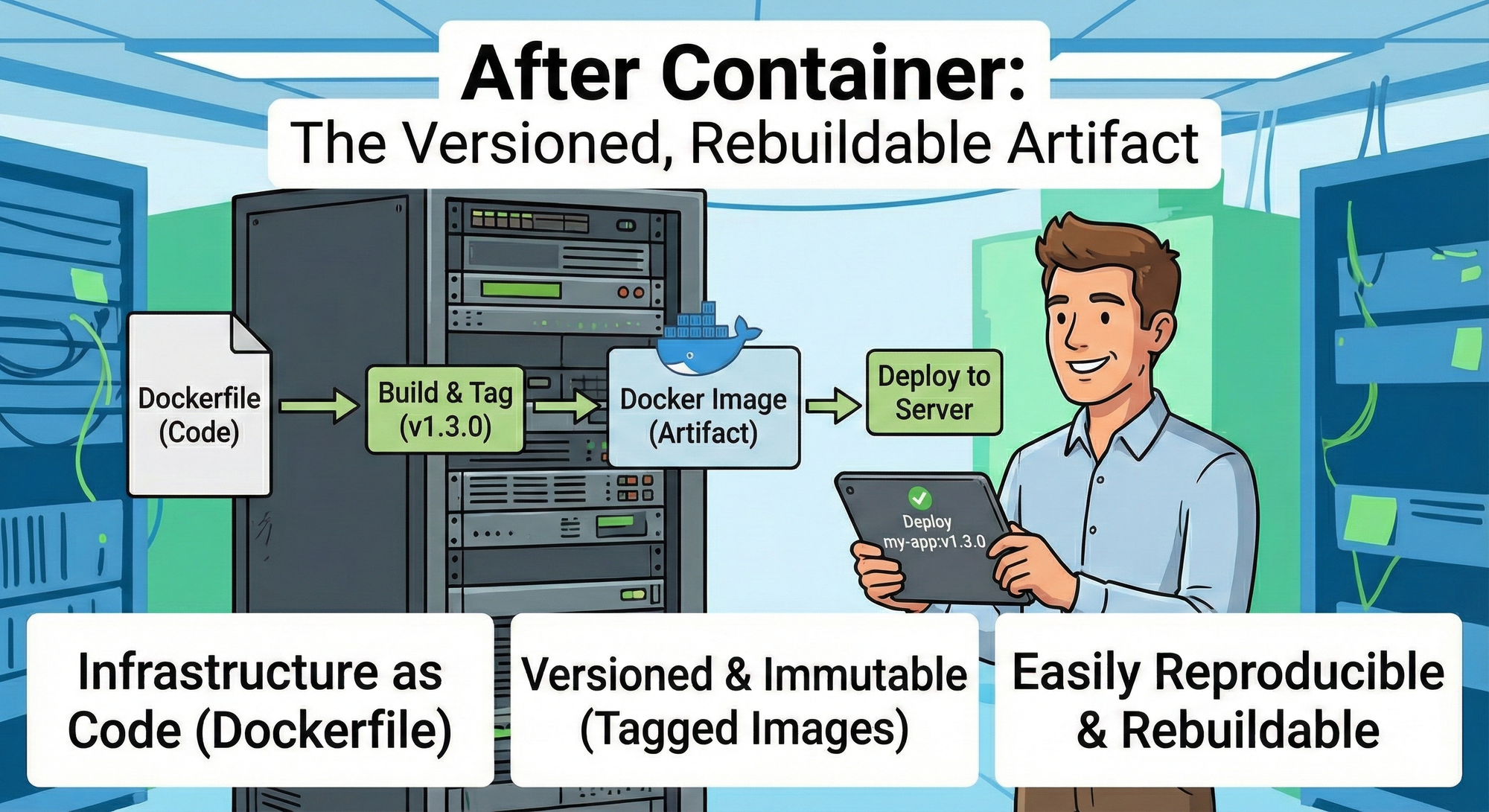
🏷️ Infrastructure as Code: The Dockerfile is the single source of truth, allowing for versioned, reproducible builds and easy rollbacks.
Conclusion
Docker changed the industry by shifting the focus from managing machines to managing applications.
By treating infrastructure like an apartment building rather than a collection of separate houses, we gain efficiency. By packaging everything into standard containers, we gain consistency.
In short, Docker gives us:
- Speed: Spin up new environments in seconds, not minutes.
- Portability: Run the exact same code on your laptop, a coworker's machine, or a massive server.
- Sanity: No more "it works on my machine" excuses or guessing how a server was configured three years ago.
It turns the chaotic art of server management into a reliable, repeatable science.
🚀 The Bottom Line: Docker lets developers focus on what matters—the code inside the room—while the infrastructure handles the building.